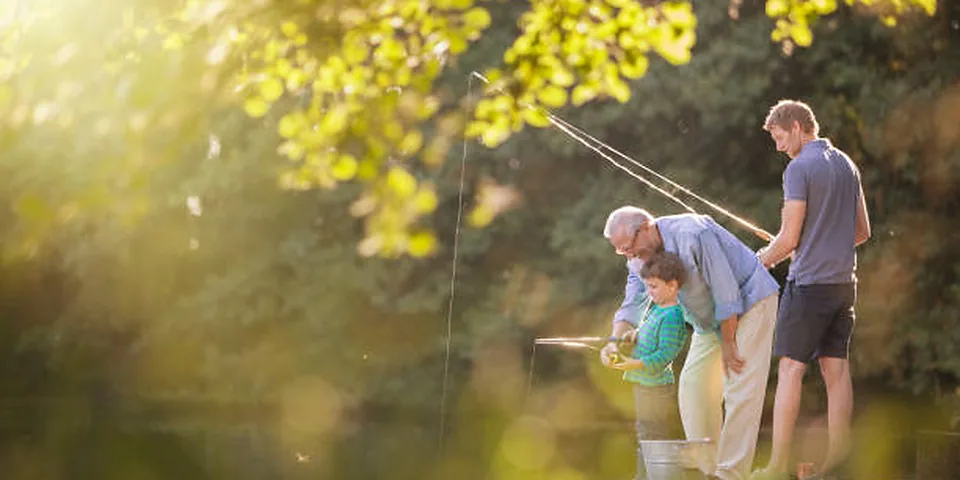
A hotel pond, resort lake, or campground pond may look like a simple guest amenity, but the answer can depend on the landowner, water classification, stocked fish, angler, and current state rule.
Room charges, campsite fees, admission, boat rentals, and fishing packages are separate from personal licensing. The property controls access and facility rules; the state usually controls licenses, seasons, species, methods, and reporting.
Quick Answer
For a fishing trip at a hotel, resort, or campground:
- Check a personal state fishing license for every person who will cast, control, reel, or keep a line in the water unless a current exemption applies.
- Treat lodging, entrance, campsite, amenity, or fishing-package fees as separate from a personal fishing license.
- Ask whether the exact pond or lake is private water, public water, or connected to a public river, lake, canal, bay, or other regulated system.
- Do not assume stocked fish make the pond license-free. Stocking often concerns the fishery, not every angler’s license obligation.
- Confirm whether a guest pass covers access only or also includes a specific fishing privilege under a written facility rule.
- Check resident and nonresident status for each angler. Staying overnight does not automatically make a visitor a resident.
- Review age rules for children and any senior or youth exemption. An adult helping a child may still need a license if the adult is actively fishing.
- Verify freshwater, saltwater, tidal, brackish, and connected-canal rules before choosing a license.
- Follow catch-and-release, harvest, species tag, report-card, cleaning, quiet-hour, night-fishing, and posted-property rules.
- Use the current state agency guidance, the exact water name, the property manager, and the latest posted notice as the final check.
Hotel Ponds, Resort Lakes, and Campground Ponds
The property name does not determine the fishing rule.
- A hotel pond may be a private amenity with guest-only access, set hours, bait limits, and catch and release.
- A resort lake may be private, leased, jointly managed, or connected to public water. A fishing package may include gear, bait, a guide, a boat, or a reserved spot without being a state license.
- A campground pond may be private, part of a park, or beside a public reservoir. A campsite reservation or vehicle pass identifies the stay, not the angler’s licensing status.
Ask the property manager whether fishing is allowed, which bank or dock is open, whether the water has an official name, what the guest pass covers, and whether children need supervision. A private lagoon, swimming cove, public shoreline, and connected canal may all have different rules on the same trip.
Lodging and Facility Fees Are Not Personal Licenses
Payment to the property is not proof that every angler has the required state license. A room bill, campsite receipt, admission ticket, or fishing add-on may prove payment for a service or amenity, not state authorization.
| Payment or document | What it may cover | What it does not automatically cover |
|---|---|---|
| Hotel room or campsite fee | Lodging, site use, or guest access | A personal fishing license |
| Resort admission or guest pass | Entry for a named person, date, or facility | License, tag, report card, or private-area access |
| Fishing package or boat rental | Gear, bait, instruction, boat time, or a reserved area | License coverage for every angler |
| Park or campground pass | Vehicle, camping, parking, or day-use access | Harvest permission or exemption from water rules |
| Liability waiver | Acknowledgment of activity risks and release terms | A license, permit, or right to keep fish |
The property may have a specific state arrangement, but do not infer one from a receipt. Ask what the fee includes, who is covered, the named water, valid dates, and whether children, guests, or nonresidents are included.
Private Water, Public Connected Water, and Stocked Fish
Private ownership answers an access question, not always the full state-law question. A hotel, campground, club, or resort may own the land while the water remains regulated. An inlet, outlet, spillway, culvert, or canal can change the classification.
Before fishing, identify:
- The exact water name, property address, county, and state.
- Whether the pond is isolated private water or connected through a stream, canal, ditch, culvert, or seasonal channel.
- Which entity controls the bank, dock, trail, gate, and fishing platform.
- Whether the property allows only guests or also day visitors, and whether a public agency has separate rules.
Stocked fish create another misunderstanding. Stocking does not automatically make a pond license free or allow any size or number. The property may impose a private harvest limit while the state regulates the species or connected water.
Some private pay-to-fish operations use a special licensing or harvest arrangement. That is a fact to verify for the exact facility, not a rule to assume for every hotel pond or campground.
Guest Passes, Residency, and Children
A guest pass can prove access to a property or amenity, but it does not automatically change an angler’s resident or nonresident status.
Residency usually belongs to the individual under the state’s definition. Booking a room, renting a campsite, owning a vacation property, or staying with a resident does not automatically create resident eligibility.
For each person, record:
- Age on the fishing date.
- Resident or nonresident status.
- Whether the person will cast, hold, control, reel, or retrieve the line.
- Whether the person will keep, clean, transport, or report fish.
- Whether a youth, senior, family, or disability exemption may apply.
- Whether the facility requires an adult, registered guest, or guide.
Children’s rules vary by state, age, water, species, residency, and activity. A child exemption does not automatically cover an adult who casts, sets the hook, reels, or maintains an active line.
Freshwater, Saltwater, and Connected Canals
Most hotel and campground ponds are freshwater, but the property label is not enough. A coastal resort may offer a freshwater pond, tidal lagoon, brackish canal, or saltwater access. A campground lake may connect to a river system with separate boundary rules.
Confirm:
- Freshwater, saltwater, tidal, brackish, or mixed-water classification.
- The legal boundary between the pond, canal, lake, river, bay, or marsh.
- Whether the same license covers both the property pond and nearby public water.
- Whether a saltwater registration, endorsement, stamp, tag, or harvest card is required.
- Whether a fishing package moves guests between water types.
A license that works for a freshwater pond may not cover a connected saltwater canal. Use the Freshwater vs Saltwater Fishing License guide as a starting point, then verify the exact water with the current state agency.
Free Fishing Days
Free fishing days may waive a base license for a published date, but they are not automatically free access to a hotel, resort, or campground. Check whether the notice covers residents, nonresidents, children, freshwater, saltwater, connected canals, and the species you plan to target. Parking, lodging, guest, boat, day-use, and facility fees may still apply. Tags, report cards, harvest limits, posted rules, and property permission can also remain in effect.
Catch and Release, Harvest, and Fish Handling
Catch and release can simplify a family outing, but it does not erase every rule. A state may still require a license, restrict methods, protect species, or regulate handling. A property may require catch and release even when state law allows harvest.
Before the first cast, ask:
- Is fishing catch and release, or may guests keep selected fish?
- Can fish leave the property, and are there private size, number, or species limits?
- Are barbless hooks, artificial lures, bait, or single hooks required?
- Must a catch be recorded, reported, tagged, or returned immediately?
- Are fish cleaning, filleting, bait disposal, and cooler use allowed?
If keeping fish is allowed, follow both layers. The state may set seasons, size limits, bag limits, species protections, tags, or report cards. The property may limit harvest, ban cleaning near rooms, or require a designated station.
Review Fishing License Tags and Report Cards before targeting a species that may need extra documentation. Do not assume that a stocked fish is exempt from reporting or that catch and release removes a tag requirement.
Posted Rules, Quiet Hours, and Night Fishing
Posted notices matter because private facilities can control how fishing happens. A sign may limit fishing to a marked bank, prohibit dock casting, close a shoreline, or identify a bait area.
Night fishing needs a separate check. State law may allow it while the property closes the pond at sunset. A campground may allow quiet fishing but prohibit lights, generators, music, or movement near sleeping areas.
Read notices at:
- The front desk, gate, ranger station, or campground office.
- The pond, dock, boat rental area, cleaning station, and entrance road.
- The campsite map, guest packet, reservation portal, or temporary closure board.
Ask whether the rule applies to all guests, registered campers, children, guides, or a named fishing package. Follow later instructions from the property manager or state agency.
Liability Waivers and Other Permissions
A liability waiver may be required before a property lends gear, allows dock use, or offers a guided activity. It addresses activity risks, but does not create a fishing license or override state regulations.
Separate these documents:
- Personal fishing license or state exemption.
- Property permission, guest pass, or campsite authorization.
- Boat rental agreement, guide contract, liability waiver, or parent consent.
- Species tag, stamp, report card, or harvest record.
If a manager says the pond is “license free,” ask whether that means free access, a specific private-water rule, or a current agency arrangement. Confirm the exact water with the state agency when unclear.
FAQ
Do hotel guests need a fishing license to fish a hotel pond?
Maybe. Private-water or special-program exemptions can exist, but other ponds remain subject to state licensing. Check the exact water and every active angler.
Does a resort fishing package include a license?
Not automatically. It may include gear, bait, a guide, or access. Verify the state license separately.
Are stocked campground ponds license free?
Not necessarily. Stocking does not by itself decide the angler’s license obligation.
Does a guest pass cover my children?
Only if the property’s terms say so. Each child’s age, residency, license, and exemption status may still need a separate check.
Does catch and release mean no license is needed?
Usually not. State licensing and method rules may still apply.
Can I fish a resort lake at night?
Only when state rules and posted property hours allow it. Check quiet hours, gates, lighting, safety zones, and notices.
Can I clean fish at my campsite or hotel room?
Only if the property permits it and state rules allow the harvest. The facility may require a designated cleaning station.
Source Checklist
Before fishing at a hotel, resort, or campground, verify:
- Current state agency license rule or published exemption for every person who will actively fish.
- Exact water name, address, county, state, and whether the water connects to a public system.
- Freshwater, saltwater, tidal, brackish, or connected-canal classification.
- Resident or nonresident status, age rules, youth rules, and required documents.
- Whether lodging, admission, campsite, guest, boat, or fishing-package fees include anything beyond access.
- Property manager approval for the exact bank, dock, pond, lake, canal, boat, and date.
- Posted rules for bait, hooks, access hours, quiet hours, night fishing, swimming, and closures.
- Catch-and-release or harvest policy, size and bag limits, species restrictions, tags, and report cards.
- Fish cleaning, keeping, transport, cooler, waste, and designated-station rules.
- Liability waiver, parent consent, supervision, emergency, and equipment requirements.
- Current state agency guidance when staff statements, signs, or online booking details conflict.
Related Reading
- U.S. Fishing License Guide
- Private Property Fishing License Rules
- Freshwater vs Saltwater Fishing License
- Resident vs Nonresident Fishing License
- Fishing License Rules for Kids and Seniors
- Free Fishing Days by State
- Fishing License Tags and Report Cards
CTA
Before your family or camping group casts a line, make a short trip note with the state, exact water, active anglers, license or exemption status, access permission, facility fees, posted hours, and harvest rules. When anything is uncertain, contact the current state agency and the property manager before fishing.