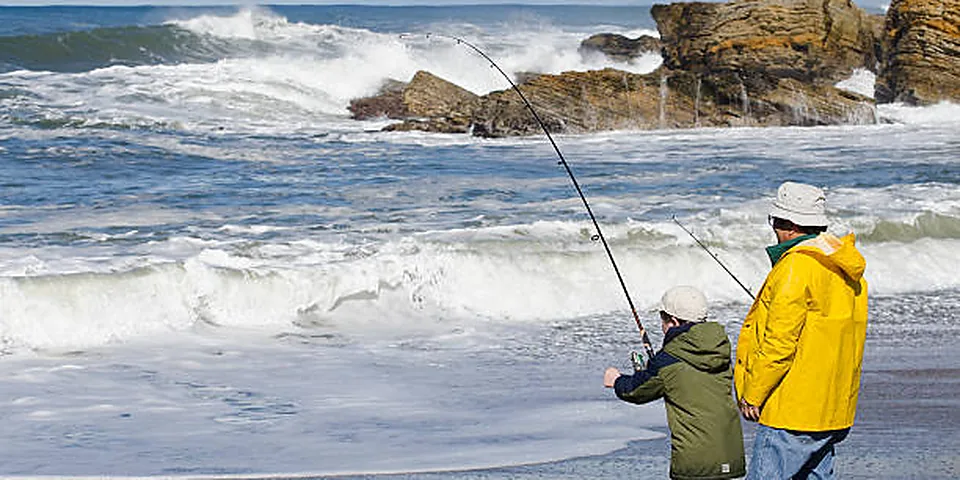
A youth fishing clinic rarely has one clean license answer, because a single event can mix a nine-year-old resident, a sixteen-year-old visiting cousin, a parent who takes a turn with the rod, and a teacher who only demonstrates a cast. Each of those people can fall under a different rule the moment age, residency, or activity changes. School sponsorship or a permission slip does not settle any of this on its own — the state fish and wildlife agency still decides who needs a license, who is exempt, and what an organizer must file separately.
The five things to pin down before the first hook hits water are the youth license fee (often $0 but not always), the age and residency threshold that triggers an exemption, whether the event runs on a short-term free-fishing window or requires a long-term annual youth license, the official agency link to verify current rules, and the handful of pitfalls — expired permits, missed 21-day filing windows, and species-specific reporting duties — that trip up first-time organizers.
Youth Age Exemptions and License Fees (2026)
States do not share one national age cutoff, and the fee attached to a youth license — where one is even required — varies just as much. Some states waive the license entirely below a set age; others sell a discounted or free youth product that still carries reporting or stamp obligations.
| No license required under age | States (2026) |
|---|---|
| 9 | Hawaii |
| 10 | Arizona |
| 12 | Montana, Nevada, New Mexico, Oregon, Utah |
| 13 | Tennessee |
| 14 | Idaho, Wyoming |
| 15 | Massachusetts, Rhode Island, Vermont, West Virginia |
| 16 | Alabama, Arkansas, California, Colorado, Connecticut, Delaware, Florida, Georgia, Illinois, Iowa, Kansas, Kentucky, Maine, Maryland, Minnesota, Mississippi, Missouri, Nebraska, New Hampshire, New Jersey, New York, North Carolina, North Dakota, Ohio, Pennsylvania, South Carolina, Virginia, Washington, Wisconsin |
| 17 | Michigan, Texas |
| 18 | Alaska, Indiana, Louisiana, Oklahoma, South Dakota |
Fee examples where a youth product still applies rather than a flat exemption: Washington’s resident youth license runs from free up to age 15 into paid combination tiers at 16; Kansas sells a Youth Multi-Year Fishing License for $40, valid until the holder turns 21, plus a discounted Youth Trout Permit at $4.50 against the adult $17.50 rate; Montana’s youth (ages 12–17) resident license sits at roughly $14; and Massachusetts issues a free Resident Minor Fishing license for ages 15–17, while non-resident minors pay $8.
Authoritative note: an age exemption removes the base license requirement in most states, but it rarely removes stamp, tag, report-card, or species-specific rules. A nine-year-old fishing free in Hawaii or Arizona can still trigger a saltwater stamp or protected-species rule depending on the water.
Record, for every youth participant: age on the event date, residency, whether they will actually cast or only watch, and whether a parent or teacher will control the rod. Nonresident status changes the exemption in most states even when the child would be exempt at home. See Fishing License Rules for Kids and Seniors for the full state-by-state cutoff table.
Organizer Permits: One-Day Event vs. Annual Youth License
This is the real short-term/long-term split for a school program, and confusing the two is the single most common planning error. A one-day or event-scoped permit covers a defined date, group, and often a catch-and-release-only format; an annual youth license belongs to one named angler and follows them to any water in the state for a full season.
| Instrument | Duration | Who it covers | Typical fee (2026) | Source |
|---|---|---|---|---|
| WA Educational Group Fishing Permit | Usually one day | Everyone in the class/clinic named on the permit | Free; apply 21+ days before the event | WDFW Group Permits |
| MN Educational Fishing License Waiver | Catch-and-release program dates | Students age 16+ in an approved aquatic education program | Free | MN DNR Fishery Permits dnr.state.mn |
| CA DFW 775 Contest/Derby Permit | Event date(s) | Applies to the contest format, not individual anglers | $83.95 application fee (2026) | CA Fishing Contests |
| KS Youth Multi-Year License | Until angler turns 21 | One named youth angler, any state water | $40 | KS Licenses & Fees |
Use a short-term group or educational permit when the program is a single clinic day, targets non-restricted species, and the goal is casting practice or catch-and-release — that keeps the paperwork to one filing and no individual licensing. Use an annual youth license instead when the school runs a season-long angling club, students will fish independently outside the supervised event, or the program involves species (salmon, steelhead, sturgeon) that most group permits explicitly exclude, as Washington’s does.
Common pitfall: Washington’s Educational Group Fishing Permit application must arrive at least 21 days before the event — a common cause of denied or unprocessed requests for last-minute school trips. California’s contest permit, by contrast, is a paid application ($83.95 in 2026) tied to prize or derby-style formats, not a free educational waiver — organizers who assume “youth event” automatically means “free permit” often file the wrong form.
Free Fishing Days vs. a Personal Youth License
A free fishing day waives the license requirement for everyone, for a specific calendar window, regardless of age — it is not the same tool as a youth exemption, and it does not remove other rules.
| State | 2026 free fishing dates | Notes |
|---|---|---|
| California | July 4 and September 5 | CA DFW Free Fishing Days |
| New York | Feb 14–15, Jun 27–28, Sep 26, Nov 11 | Freshwater only; other regs stay in effect |
| Oregon | Feb 14–15, Jun 6–7, Nov 27–28 | MyODFW 2026 Free Days |
| Georgia | Jun 6, Jun 13, Sep 26–27 | Georgia Wildlife NFBW |
| Florida | Apr 4–5, Jun 6–7 & 13–14, Sep 5, Nov 28 | Freshwater and saltwater dates differ |
| Washington | Jun 6–7 | State free fishing weekend |
Before relying on a free-day notice for a school event, confirm the exact date matches the event date (not a rehearsal or rain date), whether the waiver covers freshwater, saltwater, or both, and whether species stamps, tags, or report cards remain mandatory — free-day notices consistently state that “all other regulations remain in effect”.
School Property vs. the Actual Fishing Water
Owning the pond does not answer the licensing question; only the water’s legal classification does.
| Question | Why it matters |
|---|---|
| Who owns the land and manages the water? | Access control and fishing regulation can sit with different entities |
| Is the water connected to public water? | A private-looking pond with an inlet/outlet may still fall under state fishing law |
| Where does the line enter the water? | School bank, public dock, and private shoreline can carry different access rules |
| What species are present? | Species rules can apply even in a catch-and-release lesson |
A school pond can be private for access purposes while still regulated for fishing by the state agency. See Private Property Fishing License Rules for the access-vs-licensing distinction.
Roles: Who Actually Needs the License
| Role | Typical activity | License question |
|---|---|---|
| Clinic participant | Casts, reels, or catches fish | Check youth exemption and species rules |
| Observer | Watches without handling tackle | May need registration, not a license |
| Instructor | Demonstrates casting | Ask whether active demonstration counts as angling |
| Parent/guardian | Assists a child | A parent who takes the rod is checked separately |
| Volunteer | Check-in, safety, photos | Usually not treated as an angler |
| Teacher/coach | Leads the trip | Organizer duties don’t replace a personal license |
Building the Event Record
- Identify the exact water, access point, and managing agency — not just “school pond” or “local lake.”
2. Pull the current age exemption and fee table for the state where the event is held.
- Decide between a short-term group/educational permit and an annual youth license based on species and program length.
- File the group permit early — Washington requires 21 days, and other states set similar lead times.
- Confirm whether the date matches an official free-fishing-day window or is an ordinary program day.
- Collect parent consent, supervision plan, waiver, and insurance documents as separate items from the license question.
- Check species, harvest, tag, and report-card rules for the specific water before the lesson plan is finalized.
Parent Consent, Supervision, and Insurance Are Not a License
| Document/control | What it covers | What it does not cover |
|---|---|---|
| Parent consent | Permission to participate | A license or public-water access |
| Supervision plan | Ratios, emergency response | A personal exemption for every adult |
| Venue permission | Entry, parking, facility use | State fishing authorization |
| Liability waiver | Risk acknowledgment | A license or organizer permit |
| Insurance certificate | Coverage for the organization | Permission to fish or run a contest |
| Personal license/exemption | State authorization for the named angler | Consent, access, or insurance |
Common pitfall: organizers frequently treat a signed waiver or a district’s activity approval as if it substitutes for the state agency’s licensing rule. It doesn’t — a district can approve the trip while the state agency still controls fish, seasons, and exemptions on that water.
Pre-Event Checklist
Confirm the exact state agency, water name, access point, and event date (plus rain date)
Record age, residency, and role for every person who may touch a rod
Check each youth’s exemption against the current state age-cutoff table
Determine whether a short-term group/educational permit or a long-term youth license applies
File any group permit within the state’s required lead time (e.g., 21 days for WDFW)
Verify whether the event date falls on an official 2026 free-fishing-day window
Collect parent consent, waiver, insurance, and supervision plan as separate documents
Confirm species, tag, stamp, and report-card rules for the specific water
Keep the current state agency notice and permit confirmation with the trip records
Official Verification Links
- California Free Fishing Days
- California Fishing Contests, Tournaments and Derbies (DFW 775)
- Washington Group Fishing Permits
- Minnesota DNR Fishery Permits
- New York 2026 Free Freshwater Fishing Days
- Oregon 2026 Free Fishing Days and Events
- Georgia National Fishing & Boating Week
- Kansas Fishing Licenses & Permit Fees