The best sunglasses for fishing are the pair you will wear: look for an explicit polarized label, a credible UV-blocking claim, comfortable coverage, and a fit that stays put. Add a hat, broad-spectrum sunscreen, and protective clothing so eye and skin protection do not depend on one lens.
Freshness note: Reviewed on August 18, 2026. Price tiers are indicative, not live rankings; verify the product label, fit, warranty, and current price before buying.
This guide covers why polarization matters, which lens colors fit common waters, how wrap fit and UV ratings work, and how to budget for glasses plus hats, sunscreen, and UPF clothing. Shop sun gear after your license and core tackle—see the buy order in Fishing Gear for Beginners—and pair comfort items with a seat plan from Best Fishing Chairs and Outdoor Gear.
Why Polarization Matters on the Water
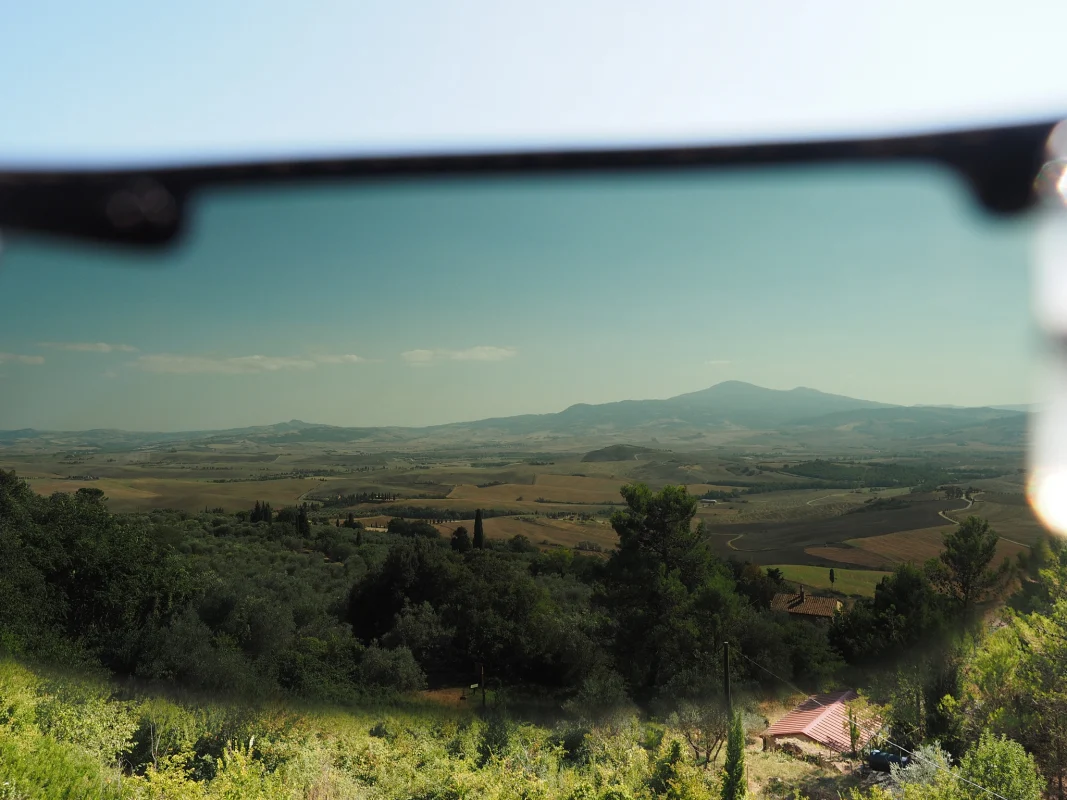
Polarized lenses contain a filter that cuts horizontally reflected glare. Flat water, wet decks, boat hulls, and pier concrete all bounce light toward your eyes in that plane. Without polarization, you mostly see sparkle. With it, you see depth, weed edges, bait clouds, and bottom color changes that guide where to cast.
| Benefit | What you notice on the water |
|---|---|
| Glare cut | Less squinting; longer comfortable sessions |
| Sight-fishing | Fish shapes and shadows become easier to track |
| Structure reading | Rocks, grass lines, and drop-offs look sharper |
| Safety | Better footing cues on wet docks and boat decks |
| Hookset timing | Clearer view of follows and short strikes |
Polarization is not the same as darkness. A dark non-polarized lens can still leave a bright sheet of glare. Look for packaging that explicitly says polarized—tint alone is not enough.
Limits to know: polarization can darken some phone screens and fish-finder displays depending on angle. Tilt the device or your head. Rainbow artifacts on ice or laminated glass are filter interactions, not defects.
Lens Colors for Common Fishing Conditions
Lens tint changes contrast and comfort. Choose for the water and sky you fish most—not for fashion.
| Lens color | Best conditions | Strengths | Watch-outs |
|---|---|---|---|
| Gray / smoke | Bright sun, open water, offshore glare | True color, all-day comfort | Less contrast boost in low light |
| Amber / copper / brown | Freshwater lakes, rivers, variable sun | Strong contrast for structure and fish | Colors shift warmer |
| Yellow / rose | Overcast, dawn/dusk, stained water | Brightens flat light | Can feel harsh in full midday sun |
| Green mirror / green base | Mixed freshwater and light salt | Balanced contrast and glare control | Depends on base tint quality |
| Blue / silver mirror (over gray) | High glare flats, beach, open bay | Extra bounce control on bright days | Mirror coats need careful cleaning |
Practical picks for beginners: copper/amber or gray polarized wrap for most daytime freshwater; yellow or light rose for overcast/dawn; gray with a mirror coat for bright sand and pier glare. Mirrored coatings do not replace polarization. Photochromic lenses help in mixed shade—confirm they are still polarized and UV-rated.
Wrap Fit, Coverage, and Frame Features
Fishing sunglasses fail when light sneaks in from the sides. A wrap frame curves toward the temples and reduces peripheral glare—the same glare that washes out a polarized lens’s advantage.
Fit checklist
Prescription options include full polarized wraps, clip-ons, or insert systems—try progressive wraps in person when you can. Avoid frames that warp open after heat; that side gap kills wrap coverage.
UV Protection: Non-Negotiable Specs
UV damage accumulates across seasons, even on cool or cloudy days, and water bounce amplifies exposure. For sunglasses, prioritize:
| Spec | What to buy | Why |
|---|---|---|
| UV claim | UV400 or 100% UVA/UVB protection | Cuts the wavelengths that damage eyes and lids |
| Polarization | Explicitly labeled polarized | Glare control for fishing performance |
| Coverage | Wrap or large coverage lenses | Blocks bounce from water and decks |
| Dark enough for sun | Comfortable in midday without squinting | Darkness ≠ UV protection, but both matter outdoors |
Do not assume a dark lens equals UV blocking. Look for UV400 or 100% UVA/UVB protection from the manufacturer; polarization and tint are separate features. Kids need the same UV standard in a smaller frame that stays on. Replace deeply scratched lenses or frames.
Hats, Sunscreen, and UPF Clothing
Sunglasses are one layer. Skin on the neck, ears, hands, and the gap under sunglasses still burns on reflective water.
Hats
| Style | Best for | Notes |
|---|---|---|
| Brimmed cap | Bank and boat | Pair with neck gaiter for rear coverage |
| Wide-brim / bucket | All-day sun | Better ear and neck shade than a ball cap alone |
| Boonie with neck flap | Open flats / tropical glare | Excellent when wind allows |
A dark underside on the brim can cut bounce into your eyes under the lenses.
Sunscreen
- Use broad-spectrum SPF 30+ on face, neck, ears, hands, and uncovered arms
- Reapply at least every two hours, and more often after swimming or sweating, according to the label
- Water-resistant formulas help on fishing days, but do not describe any sunscreen as waterproof
- Lip balm with SPF covers a spot people forget
If sunscreen stings your eyes under glasses, keep a stick or mineral option for the brow line and use lotion elsewhere.
UPF clothing
UPF (Ultraviolet Protection Factor) rates fabric’s UV blocking. UPF-rated shirts, gaiters, and gloves reduce exposed skin and reapplication gaps; choose breathable, quick-drying fabric for heat and humidity rather than assuming every UPF garment feels cooler than cotton.
| Piece | Why anglers use it |
|---|---|
| Long-sleeve UPF shirt | Arms and torso coverage without constant reapplication |
| Neck gaiter / buff | Closes the gap under the hat brim |
| Light gloves | Hand backs burn while holding a rod all day |
| Pants / gaiters | Bank hiking and tropical sun |
Choose breathable weaves for summer humidity.
Budget Tiers (No Fake Ratings)
Skip star scores and influencer “#1” lists. Match spend to how often you fish and how hard you treat gear.
| Tier | Typical spend (USD) | What you should get | Who it fits |
|---|---|---|---|
| Entry | Indicative entry range; verify current price | Real polarization + UV400, basic wrap, soft pouch | Occasional bank trips; expect to replace if sat on |
| Solid everyday | Indicative everyday range; verify current price | Better optics, grippy pads, durable hinges, retainers | Weekly anglers; best value band for most beginners |
| Premium | Indicative premium range; verify current price | Glass or high-end polycarbonate, coatings, warranty options | Guides, salt daily, prescription wraps |
| Skin system add-on | Indicative sun-layer range; verify current price | Brim hat + SPF + UPF shirt or gaiter | Every angler—do not skip for “better” lenses alone |
Spend order for new anglers
- Polarized UV400 wrap you will actually wear
- Cap or brim hat + SPF 30+
- UPF shirt or gaiter when you fish midday often
- Float strap / hard case once the glasses prove they fit
Money left after a rod combo (see Best Fishing Combo Kits Under $100) often belongs here before novelty lure packs. Comfort for a full day also includes seating and hydration planning in Best Fishing Chairs and Outdoor Gear.
Care That Keeps Lenses Clear
- Rinse salt and grit before wiping; use microfiber, not a sandy shirt hem
- Store in a hard case—dash heat warps cheap frames
- Replace deeply scratched lenses or peeling mirror coats
- For fog: vented frames, maker-approved anti-fog, or warm lenses on a clean dry layer—not sunscreen-coated fingers
Field Buyer Checklist
Use this in a store or before checkout online:
FAQ
Do I really need polarized sunglasses for fishing?
They are helpful for daytime glare and water visibility, but not mandatory. Non-polarized sunglasses can still reduce brightness; choose a polarized pair when reflected glare is the problem.
Is UV protection different from polarization?
Yes. UV blocking protects eyes from ultraviolet radiation. Polarization cuts reflected glare. Buy both on the same pair—UV400 (or 100% UVA/UVB) plus a clear polarized claim.
Which lens color is best for bass fishing?
Copper, amber, or brown tints are popular for freshwater structure and variable light. Gray is a strong all-day choice on bright open water. Pick for your typical sky, not a single species myth.
Can I fish with regular fashion sunglasses?
Only if they are truly polarized and UV-rated with decent coverage. Flat fashion lenses that leak side light and lack a polarization label are a weak fishing tool.
What SPF should anglers use?
Broad-spectrum SPF 30 or higher, reapplied through the day—especially after sweat and water contact. Cover ears, neck, hands, and the strip under your glasses.
Is UPF clothing worth it if I already wear sunscreen?
Yes for long sessions. UPF shirts and gaiters reduce missed spots and reapplication gaps. Sunscreen still matters on face, ears, and hands.
Why do my polarized glasses make my phone hard to read?
Polarizers on the lens and on many screens can cross and darken the display. Tilt the phone or your head. This does not mean the glasses are defective.
Should kids wear polarized fishing sunglasses?
Yes—same UV and glare logic, in a kid-sized wrap that stays on. Pair with a hat and sunscreen; reflective water does not spare young eyes or skin.
Do I still need a fishing license if I only bought sun gear?
Yes. Sunglasses and UPF gear do not grant fishing privileges. Start with the US Fishing License Guide 2026 before the first cast.
Related reading
- Fishing Gear for Beginners: Complete Starter Checklist 2026
- Best Fishing Chairs and Outdoor Gear
- Best Fishing Rod and Reel Combo Kits Under $100
- Best Fishing Rods for Beginners 2026
- US Fishing License Guide 2026
Official sources checked: American Academy of Dermatology sunscreen labels; EPA sun safety; OSHA eye and face protection standard.