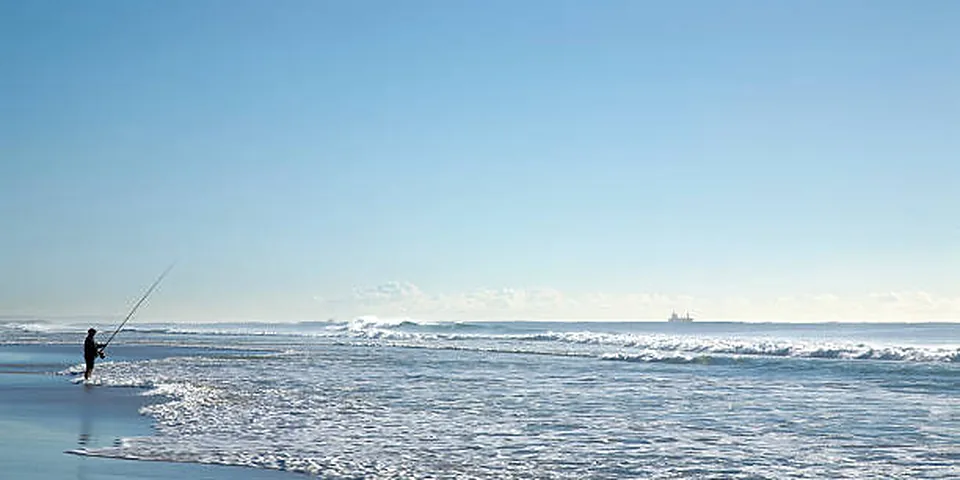
A drop-off is a place where the bottom changes from shallow water to deeper water over a short distance. From the bank, that depth transition can be more useful than a broad shallow flat or a random cast toward the middle.
The goal is not to guess the deepest part of the lake. Find the line where the bottom angle changes, learn how far it is from shore, and fish along it from more than one direction. This makes a drop-off a practical first structure to study when you do not have a boat or fish finder.
Quick Answer
To fish a drop-off from the bank for the first time:
- Confirm legal access, current fishing rules, and a safe route to the shoreline.
- Read the bank for steep slopes, points, channels, rock, and sudden contour changes.
- Use a small sinker to compare bottom depth, then try a fixed bobber above snags.
- Cast parallel to the drop-off, then across it to test the lip, slope, and deeper side.
- Adjust depth for light, wind, season, water temperature, and recent rain.
- Stand on stable ground and search one bank section with a repeatable sequence.
Do not treat a drop-off as a single magic line. Fish may hold on the shallow lip, along the slope, at the deeper base, or on nearby cover. Your first job is to learn which part of the transition your rig can reach and control.
Read Shoreline Contours Before You Cast
The shoreline often gives clues about the underwater bottom. A steep bank usually reaches deeper water faster than a broad flat bank. A point may extend a shallow ridge into deeper water. An outside bend, old channel, riprap edge, or cut in the bank can indicate a change in bottom angle.
Walk the legal shoreline slowly and look for:
- A bank that changes from flat to steep
- A point that reaches into the lake or pond
- A cove mouth where shallow water meets open water
- Rock, gravel, clay, or a creek channel
- A line where water color changes
- Baitfish, insects, birds, or surface activity near a contour
A steep bank does not prove that deep water is directly below it. The bottom may continue as a shallow shelf, or the drop may be offshore. Treat the shape as a clue, then test where the bottom stops staying shallow.
Recognize the Drop-Off From the Bank
You can estimate a drop-off without electronics by comparing casts and recording what happens. Choose a fixed reference point such as a tree, fence post, dock corner, or rock. Cast to different distances and use the same weight, countdown, or retrieve each time.
Signs of a depth transition include:
- A sinker takes noticeably longer to reach bottom
- The bobber sits differently after the cast
- A bottom rig drags smoothly, then falls, bumps, or changes angle
- Weed growth stops along a clean underwater edge
With a sinker, count down at a steady pace after the splash. A one-second difference is not a depth measurement, but repeated changes show where the bottom gets deeper. With a bobber, set a known depth and cast to several distances. If the float lies over or reaches bottom, the setting may be too deep.
Mark the transition mentally or in a fishing log.
Use a Simple Rig to Prove the Depth
Use the lightest setup that lets you understand the bottom. A basic spinning rod, manageable line, small hook, and modest terminal tackle are enough for many beginner bank situations.
Sinker rig
A small egg sinker, split shot, or other legal weight can help you reach bottom and feel the change. Use only enough weight to cast and maintain contact. Too much weight drags into rocks, mud, weeds, or wood and can hide a bite.
Use a sinker when you need bottom contact, wind is moving a bobber too quickly, or fish may be near the deeper base.
Bobber rig
A fixed bobber keeps bait above bottom and makes depth changes visible. Start shallow, then add depth in small steps when you want to fish the lip, avoid snags, or see a bite.
Match the rig to the target fish and cover instead of choosing the heaviest tackle by default. If the bait catches bottom too soon, shorten the cast or reduce the depth. If it never reaches the drop-off, cast farther or add only a little weight. Change one part of the rig at a time.
Cast Parallel to the Drop-Off
A parallel cast follows the depth transition instead of crossing it. It keeps a bait or lure near the same contour longer.
Start with a short cast along the bank, just outside visible cover. Retrieve slowly and notice whether the bottom, weeds, rock, or depth changes. Repeat at a slightly longer distance, then move a few steps along the shore if the position is safe.
Parallel casts are useful when the drop-off runs beside the bank, fish may travel along the contour, or a cross-bank cast would reach snags.
Keep the first casts short enough to retrieve a snag without entering the water. If the bottom changes halfway through, note that distance. The transition may curve away from shore.
Cast Across the Drop-Off
An across-the-break cast samples separate parts of the structure. Let the rig land on the shallow side, the slope, and beyond the break. One long cast does not test all three zones.
Use this sequence:
- Cast short to the shallow lip.
- Cast farther to reach the falling bottom.
- Cast beyond the slope to reach the deeper side.
- Repeat the best distance from a new angle.
A bobber keeps bait above each zone. A sinker confirms where the bottom begins to fall. When you feel rock, hard bottom, or a change in the fall, repeat the cast.
Match Depth to Season and Weather
Season and weather clues help you choose which part of the drop-off to test first.
In spring, warming shallow water can draw fish toward the lip, nearby flats, or protected sides of a point. Start shallow, then test the slope.
In summer, bright heat can make shade, wind, and the deeper base more important. Early and late light may bring fish onto the lip, while midday may push them just below the break.
In fall, bait and wind can make a drop-off useful when it connects shallow feeding water with a deeper route. Compare the windblown side, shallow lip, and first deeper water when access is safe.
During a cold spell, fish may use a stable deeper zone and move less. Slow down and make smaller changes in depth.
Cloud cover can spread fish across the transition, while bright sun can strengthen the value of shade and depth. Wind may push food toward one bank but also creates line slack and unsafe footing. After heavy rain, watch for rising water, debris, and a weakened bank.
Pick a Safe Bank Position and Confirm Access
A good drop-off is not useful if reaching it requires an unsafe stance. Confirm that the exact bank, path, parking area, and shoreline are open. The Private Property Fishing License Rules guide explains why land permission is separate from a state fishing license. For general licensing questions, start with the U.S. Fishing License Guide.
Before casting, check:
- Stable ground for both feet
- A clear step back from the water
- An open route for landing a fish
- No undercut bank, loose rock, deep mud, or hidden hole
- No people, roads, boats, overhead lines, or structures behind the cast
- Room to move along the drop-off without entering restricted areas
Do not lean over a steep edge or wade to reach the deeper side. Change your angle or break off rather than stepping into unknown water.
Avoid Snags Along the Break
Drop-offs often collect rock, brush, roots, vegetation, or a sharp bottom edge. Snags are more likely when a sinker drags straight down the slope or a hook sits on bottom during a long pause.
To reduce problems:
- Start with a small weight
- Cast beside cover before casting into it
- Keep the rod tip high above wood or weeds
- Use a bobber when bottom contact is not necessary
- Lift the rig over an obstruction instead of pulling hard
- Inspect the hook point and line after rough contact
When the rig snags, stop reeling, lower the rod, and change the angle. Never wrap line around your hand or pull a lure toward your body. Carry cutters and pliers; the Tackle Box Essentials checklist covers useful tools.
Use a Repeatable Beginner Search Plan
Work one safe bank section for about 30 minutes:
- Observe the bank and mark the likely contour.
- Make two short parallel casts along the nearest edge.
- Use a sinker to test three distances: shallow lip, slope, and deeper side.
- Switch to a bobber and fish above the break.
- Cast across the drop-off from two angles.
- Change one variable, such as depth, weight, bait, or retrieve.
- Repeat any bite at the same distance and angle.
- Move along the contour only when footing stays safe.
After a bite, repeat the depth and angle three times. If you only feel bottom changes, record them. A quiet session can still show where the transition begins and which rig reaches it cleanly.
FAQ
How can I find a drop-off from the bank?
Look for a steep contour, point, cove mouth, channel, rock, or visible water-color change. Then compare sinker fall time, bobber behavior, or bottom contact at several distances.
Should I cast parallel or across a drop-off?
Use both. Cast parallel to keep the bait near the transition longer, then cast across it to compare the lip, slope, and deeper base.
Is a bobber or sinker better for drop-off fishing?
A sinker finds bottom and confirms the slope. A bobber keeps bait above snags and tests a known depth. Use each for the job it handles best.
How deep should I fish a drop-off?
Start at the shallow lip or upper slope. Move deeper in small steps when light is bright, the water is hot or cold, bait is deeper, or the shallow edge is quiet.
What bait works on a shoreline drop-off?
A small worm, cricket, prepared bait, jig, spinner, or soft plastic can work when it is legal for the water and matched to the target fish. The Best Bait for Freshwater Fishing guide can help compare simple starting choices.
How do I avoid losing tackle on a drop-off?
Use only enough weight for control, fish the clean edge first, shorten the cast, and switch to a bobber when bottom contact causes repeated snags. Do not wade for a stuck rig.
Can weather change which side of a drop-off is best?
Yes. Wind can push food toward one bank, bright sun can increase the value of depth and shade, and rain can change water level, clarity, current, and footing. Treat weather as a clue and safety check.
Source Checklist
- Confirm legal access to the exact bank and route
- Check the current fishing license, water, species, bait, size, and harvest rules
- Read the shoreline for steep contours, points, channels, and bottom clues
- Pack a small sinker, fixed bobber, simple hook, legal bait, and basic tools
- Test the shallow lip, slope, and deeper side separately
- Make parallel and across-the-break casts
- Note season, light, wind, water clarity, and recent rain
- Choose stable footing and a clear landing route
- Prepare for snags without entering unknown water
- Repeat the depth and angle after every bite
Related Reading
- Fishing Gear for Beginners
- Best Fishing Rods for Beginners
- Best Fishing Line for Beginners
- Best Bait for Freshwater Fishing
- Private Property Fishing License Rules
CTA
Find one legal bank with a likely depth change and test it in three zones: shallow lip, slope, and deeper side. Use short controlled casts, record what the bottom tells you, and let the transition guide your next move.